Night vision security cameras enable visibility in darkness primarily through two technologies: infrared (IR) night vision, which uses invisible IR LEDs to produce black and white images, and color night vision, which utilizes highly sensitive sensors to amplify ambient light for full-color footage. Most residential and business security systems rely on IR for dependable, clear identification in complete darkness, while color night vision offers enhanced detail in low-light conditions.
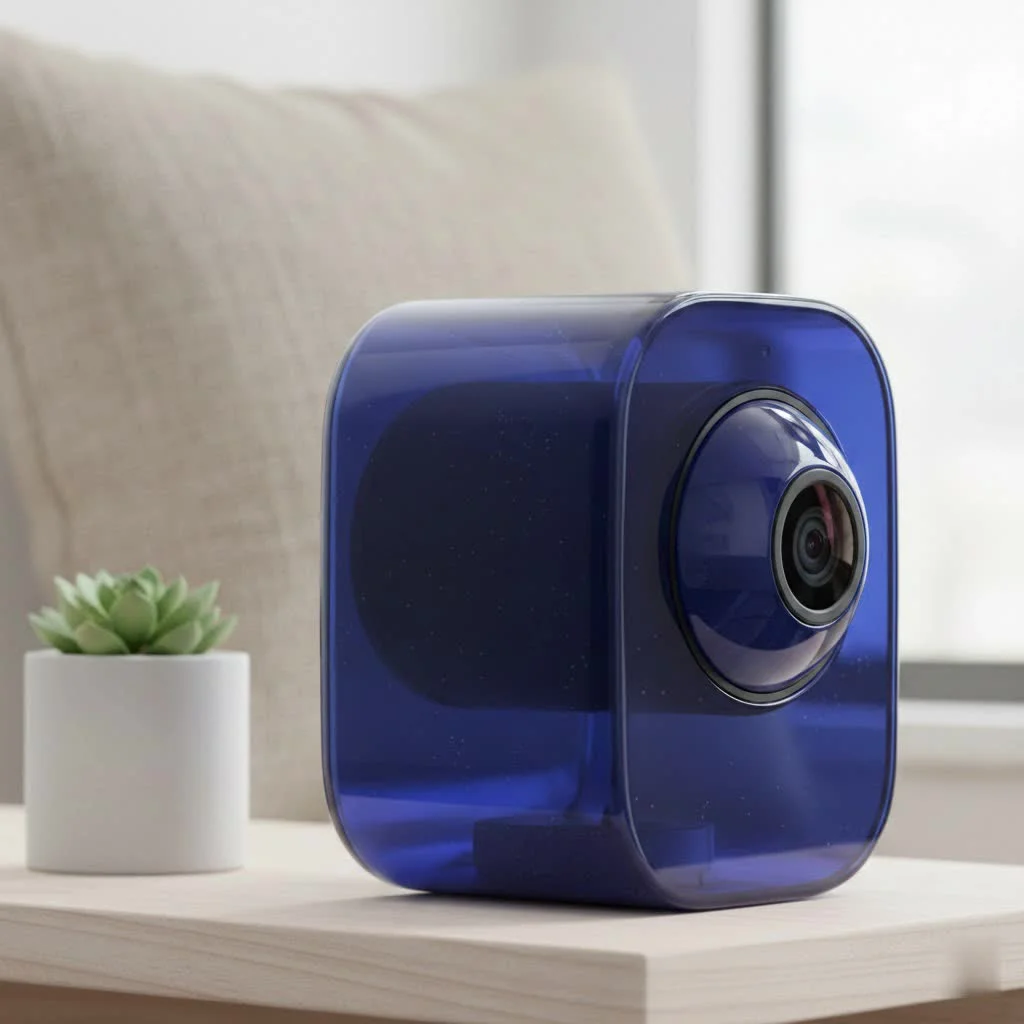 security camera monitoring a dark outdoor area” style=”margin: 20px auto;width: 800px;max-width: 100%;height: auto” />
How Do Night Vision Security Cameras See in the Dark?
It might seem like magic, but the ability of a camera to see in total darkness is pure technology. Most night vision security cameras use one of two main methods to pierce the dark: infrared (IR) night vision or advanced low-light sensors that produce color images. For compare top home on this site.
The Power of Infrared (IR) Night Vision
The most common type of night vision is infrared. It’s reliable, effective, and has been the industry standard for years.
- How it Works: These cameras are equipped with IR LEDs (Light Emitting Diodes) that are positioned around the camera lens. These LEDs project infrared light, which is invisible to the human eye but visible to the camera’s sensor. The camera’s image sensor absorbs this reflected IR light and converts it into a black and white video image.
- What You See: The result is a clear, monochromatic (black and white) image. While you don’t get color, the detail can be incredibly sharp, allowing you to easily identify people, animals, and vehicles.
- Advantages: IR technology is cost-effective and can function in absolute, complete darkness. It doesn’t need any ambient light to work.
Expert Take: According to veteran security installer, Michael Chen, “For 90% of residential applications, a quality IR camera is the workhorse. It’s dependable and provides the clarity needed for identification, which is the primary goal. Don’t get too caught up in features you may not need; focus on reliable, clear black and white footage first.”
The Emergence of Color Night Vision
A newer, more advanced technology allows cameras to see in color in low-light conditions. This can provide crucial details that black and white footage might miss.
- How it Works: Color night vision cameras use highly sensitive image sensors and wider apertures to capture as much ambient light as possible. They can take faint light sources—like a distant street lamp or moonlight—and amplify them to produce a full-color image. Some models also have a small, visible white light that acts as a spotlight to illuminate the scene and deter intruders.
- What You See: You get a vivid, color video that looks similar to daytime footage, though it may be a bit grainier depending on the amount of available light. This allows you to identify the color of a car or a person’s clothing.
- Limitations: The main drawback is that it requires some ambient light to function. In a location with zero light, such as a windowless basement, it will either produce a very dark image or switch over to standard IR black and white mode if equipped.
Key Features for Your Night Vision Security Camera
Not all night vision cameras are created equal. When comparing models, you need to look beyond the basic specs and consider the features that directly impact performance and usability.
Night Vision Range
|
Our Picks for the Best Security Camera in 2026
As an Amazon Associate I earn from qualifying purchases.
|
||
| Num | Product | Action |
|---|---|---|
| 1 | WYZE Bulb Cam Security Camera, 2K HD Outdoor Light Bulb Camera, Color Night Vision, Dimmable LED Bulb, Motion Detection, Siren Alarm, Works w/Alexa/Google Assistant. Free Expert Support |

|
| 2 | Kasa Smart Indoor Pan-Tilt Home Security Camera, 1080p HD Dog Camera w/Night Vision, Motion Detection for Baby & Pet Monitor, Cloud & SD Card Storage, Works w/ Alexa & Google Home, 2.4G WiFi (EC71) |
|
| 3 | Security Cameras Wireless Outdoor,2K Indoor WiFi Wireless Cameras,Outside Battery Powered Camera for Home Security,AI Motion Detection,Color Night Vision,Spotlight,Siren Alarm,SD/Cloud Storage,2 Pack |
|
| 4 | REOLINK 4K PoE Security Camera System Wired, 8pcs 8MP PoE Cameras, Smart Person/Vehicle Detection, 16CH NVR with 4TB HDD, H.265, 24/7 Recording, High Bitrate & Clear Stream, RLK16-800D8 |
|
| 5 | Security Cameras Wireless Outdoor-Solar&Battery Powered 2K 2.4G Cameras for Home Security, Instant Alert, AI Human Detection, Color Night Vision, 2-Way Talk, SD Storage, Work with Alexa, Z1 4P |
|
| 6 | Tapo TP-Link 2K Pan/Tilt Indoor Security Camera for Baby Monitor, Pet Camera, Motion Detection & Tracking, 2-Way Audio, Cloud & SD Card Storage, Works w/Alexa & Google Home, Black, C211(2-Pack) |
|
| 7 | WYZE Cam Pan v3 Indoor/Outdoor IP65-Rated 1080p Pan/Tilt/Zoom Wi-Fi Smart Home Security Camera with Color Night Vision, 2-Way Audio, Compatible with Alexa & Google Assistant, White, 2-Pack |
|
| 8 | TP-Link Tapo 1080P Indoor Security Camera for Baby Monitor, Dog Camera w/Motion Detection, 2-Way Audio Siren, Night Vision, Cloud & SD Card Storage, Works w/Alexa & Google Home (Tapo C100) |
|
| 9 | WYZE Cam v4 (Latest Model), 2.5K AI Security Camera, Indoor/Outdoor Cameras for Home Security, Baby Monitor & Pet Camera, Vibrant Color Night Vision, No Subscription Required, Free Expert Help |
|
| 10 | Tapo 2K Pan/Tilt Security Camera for Baby Monitor, Dog Camera w/Motion Detection, 2-Way Audio Siren, Night Vision, Cloud&SD Card Storage, Works w/Alexa & Google Assistant, 2-Pack (Tapo C210P2) |
|
The range dictates how far your camera can see in the dark. This is often listed in feet or meters. A camera with a 30-foot range is fine for a small porch, but for a long driveway or backyard, you’ll need one with a range of 100 feet or more. Always check this spec and measure your space to ensure the camera meets your needs.
Resolution and Image Quality
Resolution is just as important at night as it is during the day. A higher resolution (like 1080p, 2K, or 4K) provides a clearer, more detailed image. This can be the difference between seeing a blurry figure and being able to clearly identify a face or license plate from a distance. For night vision, a higher resolution helps combat the “graininess” that can occur in low light.
Field of View
The field of view (FoV) determines how wide of an area the camera can capture. A wider FoV means you can cover more ground with a single camera. For monitoring large areas like a backyard or parking lot, look for a camera with a FoV of 130 degrees or more. For a narrow hallway or entryway, a smaller FoV is sufficient.
Smart Features and Integration
Modern cameras come with a host of smart features that enhance their effectiveness:
- Smart Motion Detection: Instead of alerting you for every passing car or swaying tree branch, smart detection can differentiate between people, animals, and vehicles. This dramatically reduces false alarms.
- Two-Way Audio: This feature allows you to hear what’s happening and speak through the camera’s speaker, which is perfect for scaring off intruders or speaking to a delivery person.
- Weather Resistance: If you’re installing a night vision security camera outdoors, it must have an IP (Ingress Protection) rating. An IP66 rating or higher ensures it can withstand rain, snow, and dust.
Common Problems with Night Vision Cameras (And How to Fix Them)
Even the best cameras can run into issues. Knowing how to troubleshoot common problems will save you a lot of frustration.
Problem: Glare and Reflections
- The Cause: Often, this is caused by the camera’s own IR LEDs reflecting off a nearby surface, like a windowsill, soffit, or the glass of a window.
- The Fix: Make sure there are no obstructions directly in front of the camera. If you’re trying to point a camera out a window, it won’t work well at night; the IR light will just bounce off the glass. You need to mount the camera outside. Also, keep the lens clean, as smudges and dirt can cause glare.
Problem: Washed-Out Images
- The Cause: If a person or object is too close to the camera, the IR light can be too intense, making them look like a white ghost. This is known as IR bounce-back.
- The Fix: Position your camera so that the main monitoring area is not right up against the lens. Aim for a distance of at least 5-7 feet for the primary subject area. Some high-end cameras have “Smart IR” that automatically adjusts the intensity of the infrared light to prevent this from happening.
Securing Your Peace of Mind
Choosing the right night vision security camera is a critical step in building a comprehensive security system. By understanding the technology, focusing on key features like resolution and range, and knowing how to position your cameras correctly, you can ensure your property is protected around the clock. Don’t leave your security to chance after dark. Invest in a quality night vision solution and gain the peace of mind that comes with knowing you’re always watching.
Get our weekly buyer guide
Practical specs, not advice. Unsubscribe anytime.
My business security system needed an overhaul, and this guide was a lifesaver. The part about residential and business security systems relying on IR for dependable, clear identification in complete darkness really resonated with me. I installed an IR system, and the footage is incredibly reliable, giving me peace of mind knowing my property is monitored effectively 24/7.
I found the information about highly sensitive sensors for color night vision really useful. However, I wish there was a bit more comparison on the price points for systems with advanced low-light sensors versus standard IR. My new camera works well in low light, but it was a bit more expensive than I anticipated, and I’m not sure if the extra cost was fully justified for my specific needs.
I was really impressed with the detailed explanation of infrared (IR) night vision. My old camera system was practically useless after dark, but after reading about the different technologies, I upgraded to an IR camera and the difference is night and day. The black and white images are super clear, even in total darkness, which is exactly what I needed for my backyard.
This guide helped me understand the difference between IR and color night vision. I ended up going with a system that has color night vision for my front porch, and it’s great for picking up more detail when there’s a little bit of ambient light. It’s definitely an upgrade from my previous setup, and I appreciate knowing the tech behind it.